


Inlays and Onlays
Affordable dentist in Kendall

Inlays and Onlays
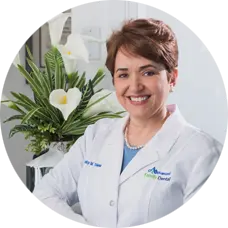
When a tooth has been damaged by decay or fracture to a degree that is too extensive for a standard filling but does not yet require a full crown, there is an ideal middle-ground solution that preserves more of your natural tooth structure while delivering superior strength and aesthetics. Inlays and onlays are custom-fabricated restorations placed in or over the damaged portions of a back tooth, restoring its form, function, and appearance with exceptional precision. At Advanced Family Dental, Dr. Nelcy Triana offers tooth-colored inlays and onlays as part of a comprehensive approach to restorative and cosmetic dentistry that prioritizes conservation of natural tooth structure whenever possible.
Often called indirect fillings or partial crowns, inlays and onlays have been used in dentistry for decades and remain one of the most conservative and durable options for restoring moderately damaged teeth. With modern materials and digital fabrication technology, today’s inlays and onlays are more precise, more natural-looking, and more durable than ever before.
The Difference Between Inlays and Onlays
Inlays and onlays are closely related but differ in the area of the tooth they restore. An inlay fits within the grooves of a tooth, restoring the interior of the chewing surface without extending over the cusps, the raised points at the corners of a back tooth. An inlay is the right choice when decay or damage is confined to the central area of the chewing surface.
An onlay covers a larger area and extends over one or more of the cusps of the tooth. This makes it the appropriate option when damage is more extensive and reaches the outer edges of the chewing surface. Onlays are sometimes called partial crowns because they protect a significant portion of the tooth’s surface while still preserving the healthy walls of the tooth that remain.
Both restorations are fabricated outside the mouth in a dental laboratory from a precise impression or digital scan of the prepared tooth, then bonded permanently into place. This indirect fabrication process gives the restoration a level of accuracy, strength, and fit that cannot be achieved with a direct filling placed freehand in the mouth.
Why Choose an Inlay or Onlay Over a Filling?
Standard composite or amalgam fillings are appropriate for small to medium areas of decay, but they have limitations. As the size of a direct filling increases, the risk of marginal failure, shrinkage, and stress fractures also increases. Large fillings can also weaken the surrounding tooth structure over time. An inlay or onlay, because it is fabricated to precise specifications and bonded with strong dental adhesives, actually reinforces the tooth rather than simply filling a void.
The fit of an inlay or onlay is typically far more precise than that of a direct filling, which reduces the risk of recurrent decay at the margins. The materials used, most commonly tooth-colored porcelain or composite resin, are highly durable, resist staining, and wear at a rate similar to natural enamel, preserving the opposing teeth more effectively than metal alternatives.
Why Choose an Inlay or Onlay Over a Crown?
A full crown covers the entire visible portion of a tooth above the gumline and requires significant removal of tooth structure on all sides to accommodate the crown’s thickness. When the extent of damage genuinely requires a full crown, it is the right solution. However, when a meaningful amount of healthy tooth structure remains and the damage is limited to the chewing surface or one to two cusps, an onlay can restore the tooth effectively while preserving the healthy walls that would otherwise be removed for a crown.
Preserving natural tooth structure is always a priority at Advanced Family Dental. The more of your original tooth that remains, the better the long-term prognosis for that tooth. Dr. Triana applies a conservative treatment philosophy to every restorative decision, recommending the least invasive option that will deliver a durable and lasting result.
What to Expect During Treatment
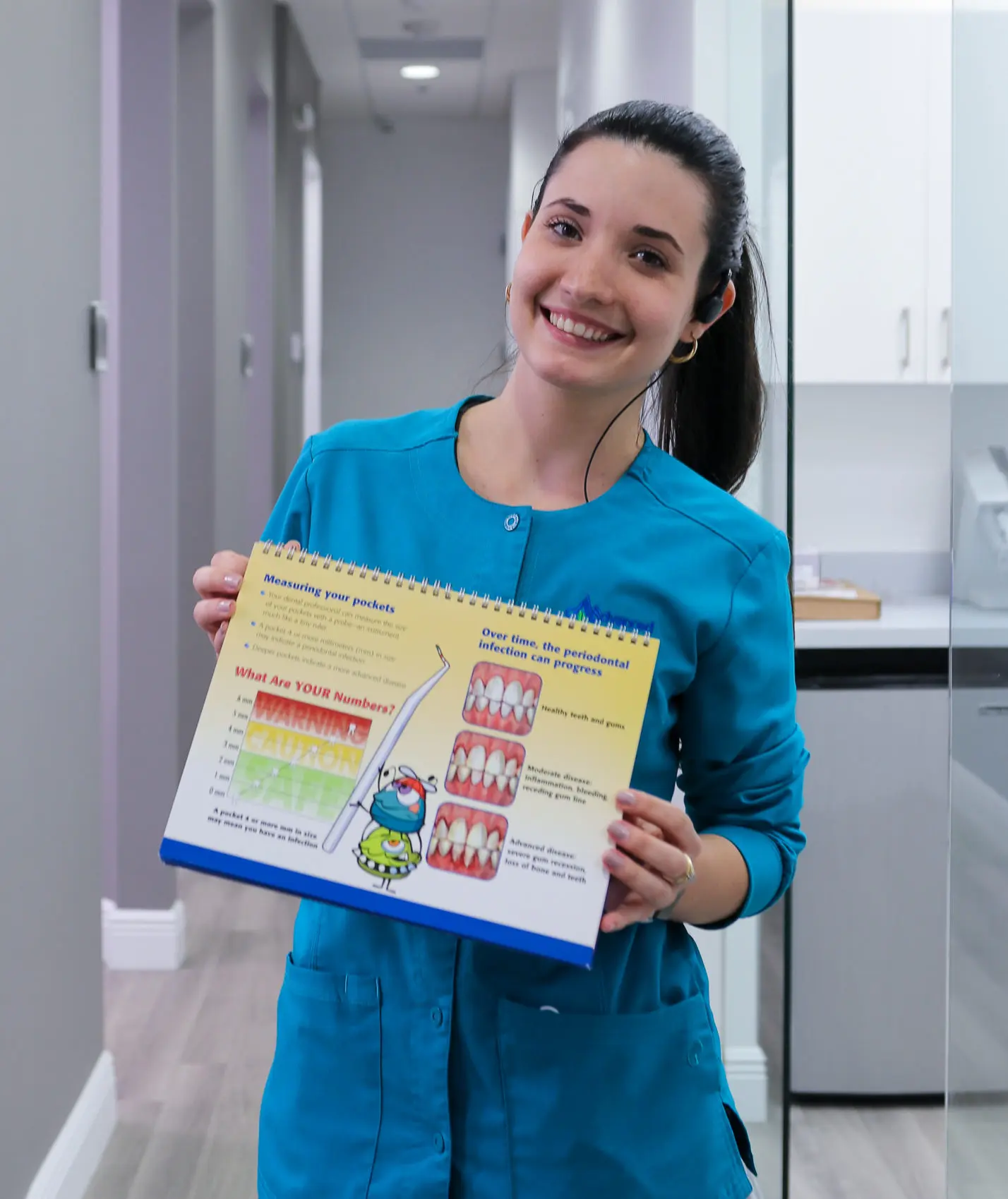
The inlay or onlay process at Advanced Family Dental typically requires two appointments. At the first visit, the decayed or damaged area is carefully removed, and the tooth is prepared to receive the restoration. Digital scans or impressions of the prepared tooth are taken and sent to the dental laboratory. A temporary restoration is placed to protect the tooth between appointments.
When your custom inlay or onlay is ready, you return for the second appointment. Dr. Triana removes the temporary restoration, cleans the tooth thoroughly, and carefully evaluates the fit and appearance of the fabricated piece before bonding it permanently in place. The bite is checked and adjusted as needed to ensure the restoration functions comfortably and naturally. The final result is a restoration that is virtually indistinguishable from natural tooth enamel and built to last for many years with proper care.
Inlays and onlays are an excellent example of how modern restorative dentistry can achieve outstanding results while honoring and protecting what remains of the natural tooth. At Advanced Family Dental, we take pride in offering restorative options that are thoughtful, precise, and designed to serve our patients well for the long term.
Testimonials
See What Our Patients Are Saying

I was really impressed with the office staff and Doctor. They were extremely friendly and took the time to explain to both my husband and I what kind of work we needed done and why. I’ve been to other offices where they try to push unnecessary procedures on you

My whole family has been patients at Advance Family Dental for some time now and their service has been amazing. The atmosphere of good and friendly attention from their professional office staff makes them helpful in understanding

Dr. Traina makes you feel as if you’ve been her patient for a lifetime. Few dentists have ever gone the extra step to ask about me! She gets to know her patients as people not just names on files and screens. She makes you feel so comfortable.

Our family is so glad to have found this gem. This dental practice is a cut above most practices – and we have checked out several – in the area. The place is family friendly, nice and clean, the equipment cutting edge,
Advanced Family Dental
Contact Us
Call Us
786.899.0889
Location
Kendall Pointe Plaza
16650 SW 88th Street, Suite 106
Miami, FL 33196
Office Hours
Monday-Friday: 9am to 6pm
Saturday: By appointment